About VTU project requirements
Visvesvaraya Technological University (VTU) is headquartered in Belagavi, Karnataka, and affiliates over 200 engineering colleges across the state. VTU follows the Choice Based Credit System (CBCS) and has specific guidelines for final year project work.
For BTech CSE students, the final year project is typically a 8th semester course worth 6-8 credits. It includes two phases: Phase 1 (project selection and preliminary work in 7th semester) and Phase 2 (development, testing, and submission in 8th semester).
VTU project evaluation structure
VTU evaluates projects across two components:
- Continuous Internal Evaluation (CIE) — 50 marks. Based on three review presentations, weekly progress, and guide assessment throughout the semester.
- Semester End Examination (SEE) — 50 marks. Conducted by external examiners. Includes project demonstration, report evaluation, and viva-voce.
The three review presentations are crucial at VTU. They happen at regular intervals during the semester, and each review typically carries equal weightage in CIE marks.
VTU project documentation requirements
VTU prescribes a specific format for project documentation:
- Report must follow the VTU project report format template (available on the VTU website)
- Minimum 60 pages for major projects
- Must include SRS (Software Requirements Specification) document
- UML diagrams are mandatory — use case, class, sequence, and activity diagrams
- Testing chapter must include test cases in tabular format
- Black or dark blue hardbound cover with gold lettering
- CD/DVD with source code in a sleeve inside the back cover
Popular project domains for VTU students
- Machine learning and AI — image classification, NLP applications, predictive analytics
- Web applications — full-stack projects using React/Django, MERN stack, or Spring Boot
- Cloud computing — applications deployed on AWS/Azure with auto-scaling
- Cybersecurity — network intrusion detection, phishing detection, secure authentication
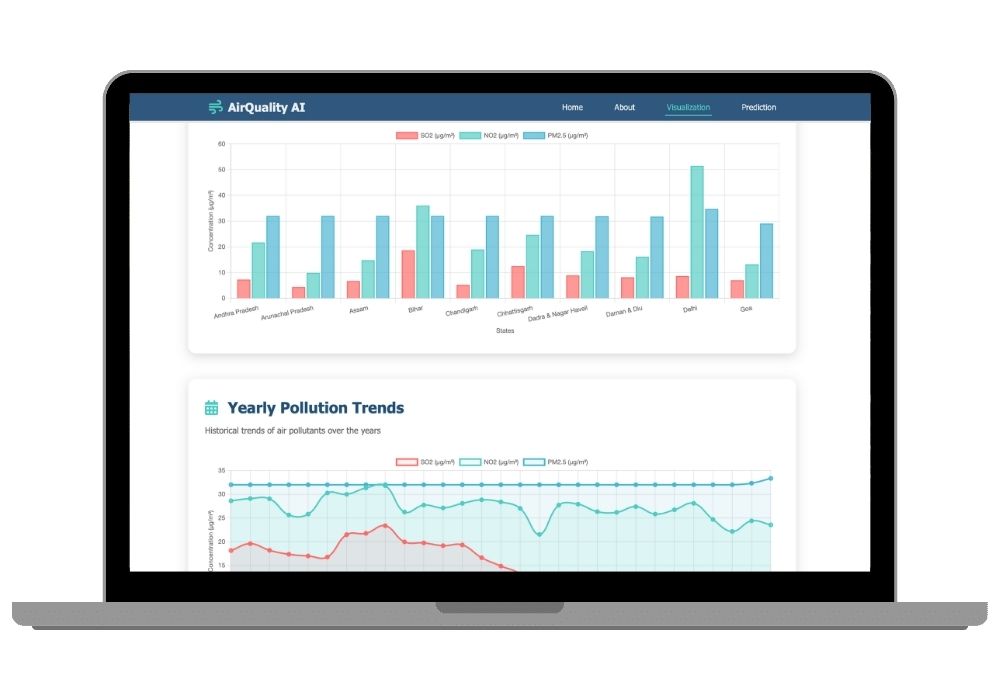
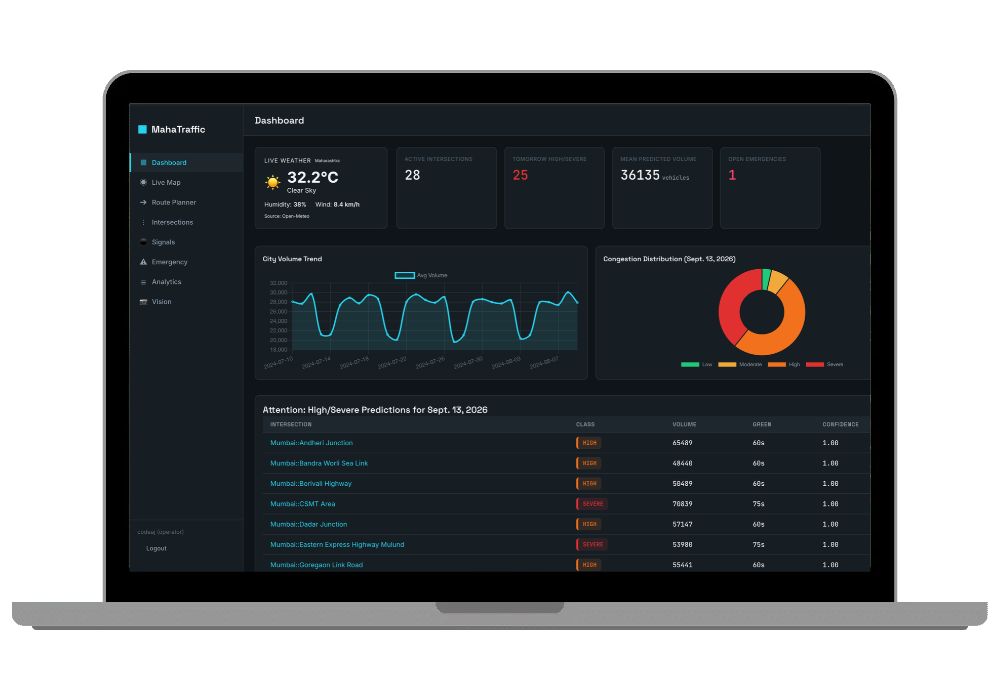
- Data science — data visualization dashboards, analytics platforms
VTU review presentation guidelines
VTU requires three formal review presentations during the project semester:
- Review 1 — present problem statement, objectives, literature survey, and proposed methodology. This review confirms your project topic.
- Review 2 — present system design (architecture, DFDs, ER diagrams), technology stack, and initial implementation progress.
- Review 3 — present completed implementation, testing results, and final demonstration.
Each review is evaluated by a panel of 2-3 faculty members. Missing a review can result in losing all CIE marks for that review.
How CodeAj projects suit VTU requirements
- Projects include UML diagrams (use case, class, sequence, activity) required by VTU
- Report format aligns with VTU documentation standards
- Source code is well-structured and commented for easy explanation
- Testing documentation includes comprehensive test case tables
- We provide presentation templates suitable for all three VTU reviews
Tips for VTU project success
- Choose a topic in 7th semester itself — VTU Phase 1 begins in the 7th semester. Early selection gives you more time for development.
- Take all three reviews seriously — CIE marks are based on reviews. Missing even one review can drop your score significantly.
- Prepare working demos for each review — show incremental progress. A project that works partially at Review 2 is better than only having designs.
- Include proper UML diagrams — VTU evaluators specifically check for UML compliance. Use professional tools, not hand-drawn diagrams.
- Get your CD/DVD ready early — VTU requires source code on physical media. Prepare it before your final submission date.