RaktSetu — Hyperlocal Blood Donor Emergency App | Flutter + Django Final Year Project with Source Code
A blood emergency app that finds the nearest matching donor in seconds — Flutter app, Django + Celery backend, real geo-matching. Full source code and report included.
Technology Used
Flutter 3 | Django 4.2 + DRF | Celery + Redis | Firebase Cloud Messaging | PostgreSQL | Riverpod


What This Project Actually Does
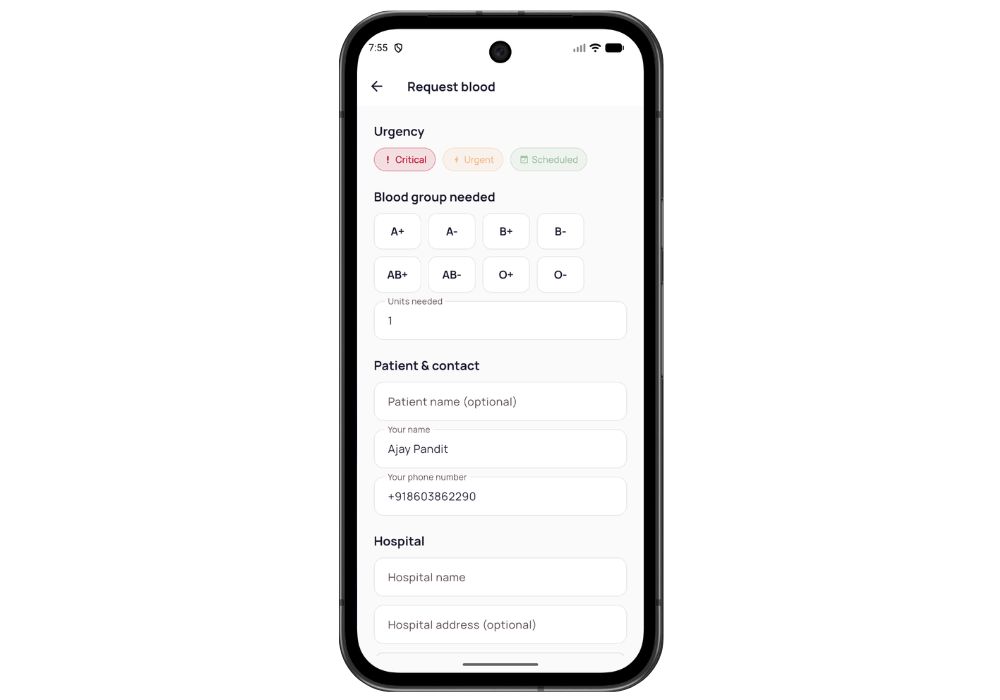
Someone's family member needs O-negative blood at 2 AM at a hospital in Jayanagar. They open RaktSetu, file a request with the blood group, the hospital location, and how urgent it is. That's it. The backend takes over from there — it runs a Haversine distance calculation against every registered donor, filters out the ones who aren't blood-group compatible, aren't verified, aren't marked available, or donated less than 90 days ago, sorts whoever survives that filter by distance, and fires a push notification to the closest ones first.
The donor gets a notification on their phone. They tap Accept right there. Request status moves from Open to Partially Fulfilled to Fulfilled.
And if nobody responds? A background job widens the search ring — 15 km, then 30, then 50 — on a timer that scales with urgency. Critical requests expire after 6 hours, Urgent after 24, Scheduled after 72. A Celery Beat job sweeps the dead ones out every 5 minutes so the donor feed never fills up with requests from last Tuesday.
Key Features
- Geo-matching that actually calculates distance. Haversine formula in
core/matching.py, not a fake "nearby donors" list sorted by ID. You can literally change a donor's lat/long in the admin and watch the match order flip. - Blood group compatibility logic. O-negative matches everyone. AB-positive receives from everyone. The compatibility matrix is coded in, so a request for A+ pulls A+, A-, O+ and O- donors — not just exact matches.
- 90-day eligibility tracking. A donor who donated 40 days ago is invisible to the matcher. Automatically. The countdown shows on their profile screen.
- Async notification pipeline. Celery + Redis handle the matching and the Firebase Cloud Messaging dispatch, so the requester's POST returns in milliseconds instead of blocking while the server pings 200 donors.
- Phone OTP login with JWT. No email, no password. Enter number, get OTP, you're in — which is how every Indian app works, and your examiner will notice you got that right.
- Expanding search radius.
widen_search_taskre-runs the match at the next radius ring if the wait window passes with no accepts. - Fraud guards and throttling. Request rate limits, verified-donor gating, so one person can't spam 50 fake emergencies.
- Accessibility built into the design system. Urgency and status are never shown as colour alone — always colour plus icon plus text. Small thing. Says a lot in a viva when you explain why.
- Seeded demo data.
python manage.py seed_datagives you donors spread across a city with different blood groups and donation dates, so the matching demo works two minutes after setup.
Real-World Applications
This isn't a made-up problem. Blood banks in India run on WhatsApp forwards and Facebook groups — someone posts "urgent B+ needed at St. John's", it gets shared 400 times, and the six people who could actually help never see it because they're not in that group.
Hospital blood banks could run this to maintain a standby donor pool. NGOs and college NSS units already keep donor registers in Excel sheets; this replaces that. Thalassemia support groups need recurring donors on a schedule, and the 90-day eligibility tracker is exactly the thing they track by hand right now. Corporate CSR blood drives, district-level Red Cross chapters, even a single large hospital covering a 30 km catchment — all of it maps onto what this thing does.
Who Should Buy This
Look — if you're a BCA or MCA student with a submission in three weeks and you need something that isn't the fifteenth "Student Management System" your guide has seen this semester, this is a good pick. Social impact angle, real algorithm inside, two-part architecture. Guides like all three of those things.
It's also right for BTech CSE students who need a major project with genuine backend depth. Celery task queues, Redis, push notification pipelines, geospatial matching — this is the stuff that comes up in interviews, not just in vivas.
Honest bit: if you've never touched Flutter or Django before and your submission is in four days, this will be tight. Doable with our setup session, but tight. If you have two weeks and you're willing to actually read the code, you'll be fine.
The one genuinely hard part
Firebase. The backend push pipeline is complete — it builds the payload, logs every dispatch to NotificationLog, handles retries. In dev mode it prints pushes to your console instead of sending them, which means the entire flow works and demos perfectly with zero Firebase account. But to make a real notification land on a real phone, you need your own Firebase project and a google-services.json. Same story for Google Maps — the app has google_maps_flutter wired into the Android manifest, the iOS AppDelegate and the web index, with an empty key slot waiting for your Google Cloud key. Location capture via geolocator works without any key at all.
Both are free to set up. Both take about twenty minutes. Both are covered in the setup session if you'd rather not fight with the Firebase console at midnight.
The part that's easier than it looks
Dev mode. SMS and FCM both run on console backends locally, and the OTP endpoint returns debug_otp straight in the response body. So the entire login flow — enter number, receive OTP, verify, get JWT — works on your laptop with no Twilio account, no SMS credits, no Firebase. Most students expect to lose a whole day on auth. You'll lose about ten minutes.
Why CodeAj
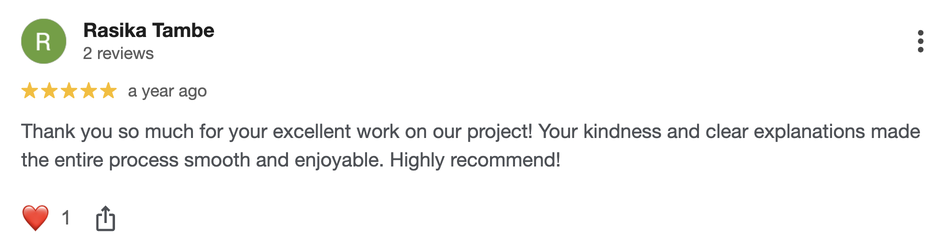
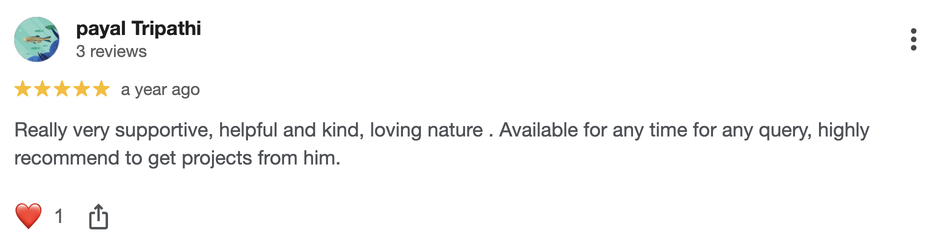
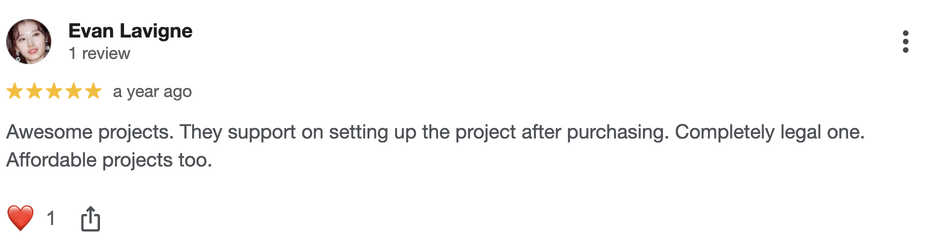
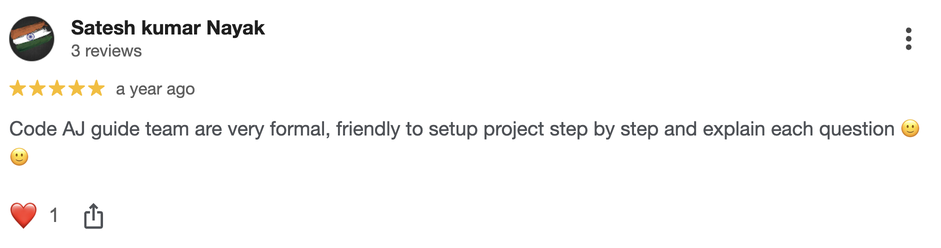
You get the complete monorepo — backend/ and raktsetu_app/, each with its own README covering setup commands, the full API endpoint table, and deploy notes. There are systemd units and an nginx config in backend/deploy/ from an actual VPS deployment, not templates someone copied off a blog. The college-format project report comes with it: abstract, literature survey, system design, ER and data flow diagrams, testing, the whole structure your department wants. If something breaks during setup, we get on a call and fix it — that's what the project setup service is for. Browse the rest of our Flutter final year projects with source code or the Django project collection if you want to compare before deciding.
Frequently Asked Questions
Extra Add-Ons Available – Elevate Your Project
Add any of these professional upgrades to save time and impress your evaluators.
Live 1-on-1 Mentorship
Personal session with an expert developer
Project Setup
We'll install and configure the project on your PC via remote session (Google Meet, Zoom, or AnyDesk).
Source Code Explanation
1-hour live session to explain logic, flow, database design, and key features.
Want to know exactly how the setup works? Review our detailed step-by-step process before scheduling your session.
₹999
Custom Documents (College-Tailored)
- Custom Project Report: ₹1,500
- Custom Research Paper: ₹1,000
- Custom PPT: ₹800
Fully customized to match your college format, guidelines, and submission standards.
Project Modification
Need feature changes, UI updates, or new features added?
Charges vary based on complexity.
We'll review your request and provide a clear quote before starting work.