Deep Learning Projects with Source Code

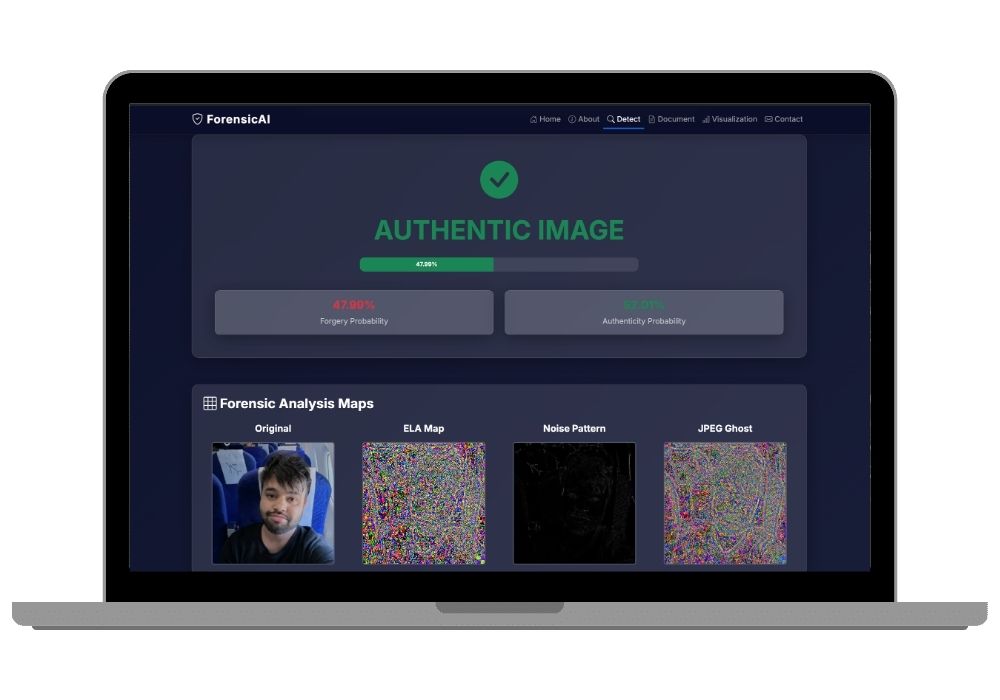
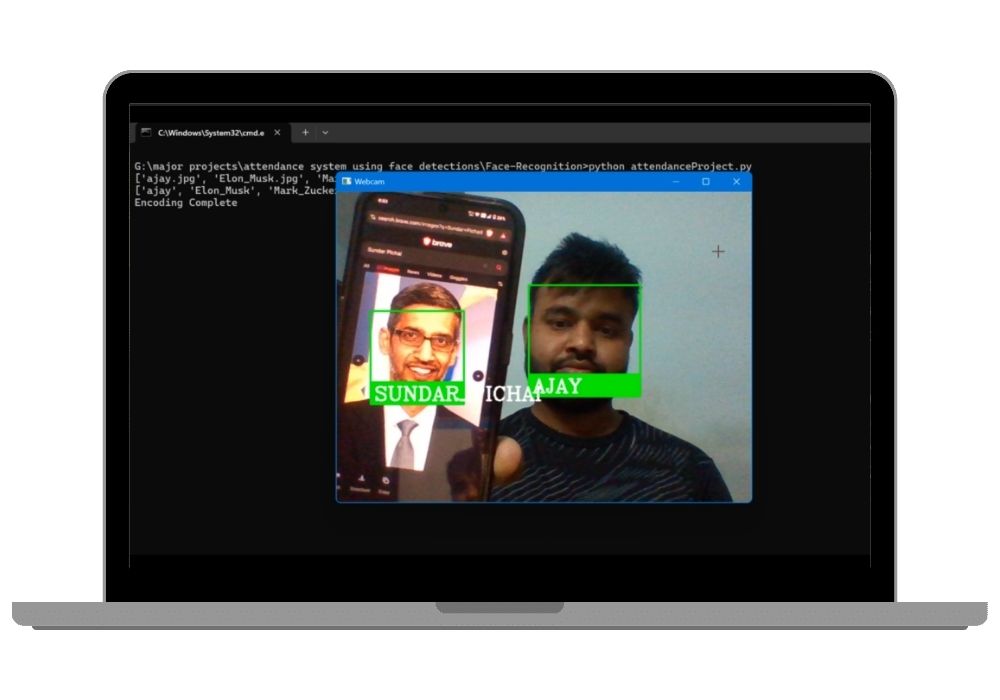
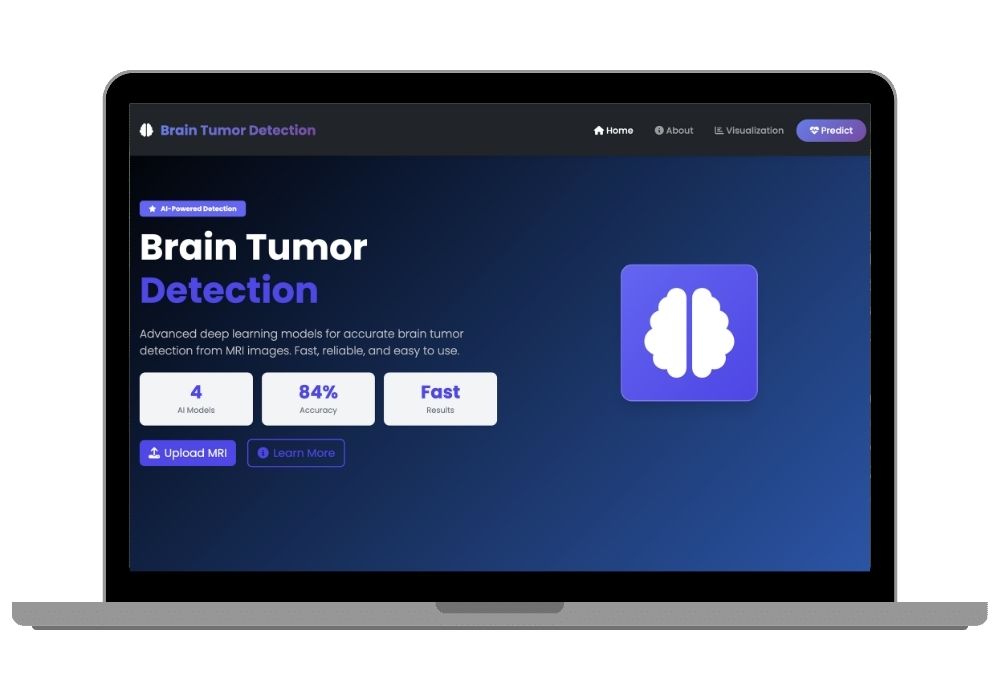
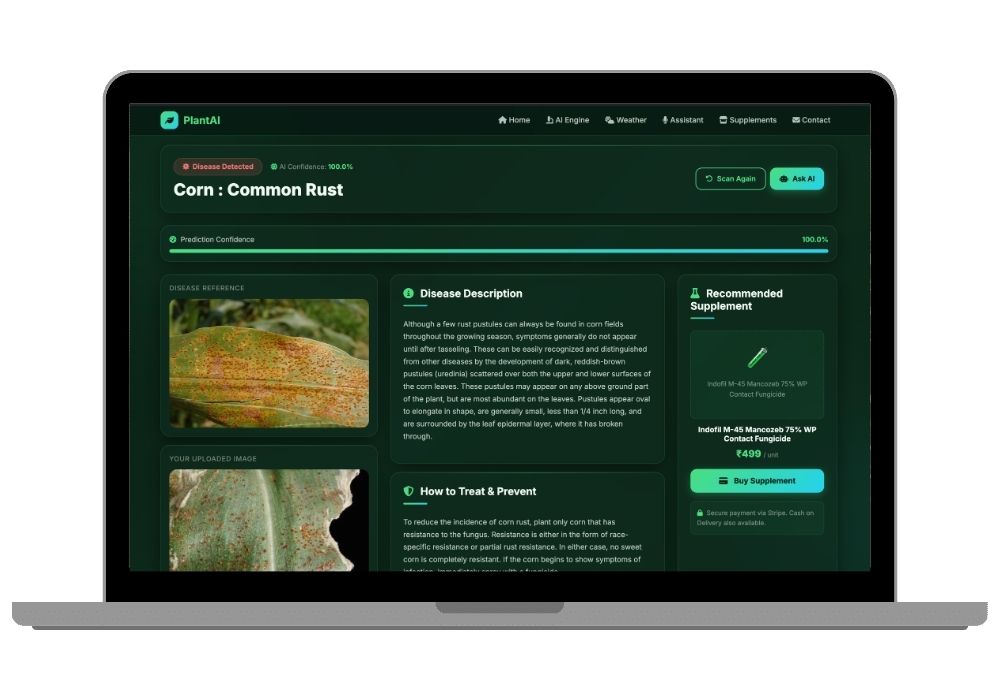
Deep learning is where the most interesting AI work happens — image recognition, language models, generative art, and autonomous systems all run on deep neural networks. Our projects cover CNNs for image tasks, Transformers for text, LSTMs for sequences, GANs for generation, and autoencoders for anomaly detection. Each project includes the model architecture code, training scripts with hyperparameter configs, pre-trained weights so you can skip the training step, and a web interface for running inference. The code uses TensorFlow/Keras or PyTorch with clean model definitions, proper data loading pipelines, and training loops with checkpointing and early stopping.

Browse All Projects

CodeAj has 20+ deep learning projects with complete source code and pre-trained models. Covers CNNs, Transformers, GANs, LSTMs, and autoencoders using TensorFlow and PyTorch. Includes training notebooks, datasets, and web demos. From Rs.99.

  • 100% Source Code
  • Free Setup Support
  • 5000+ Students Served
  • Free Updates

Deep Learning Architectures in Our Collection

Each project focuses on a specific architecture and problem domain. You get to see how the architecture works in practice, not just in theory.

Convolutional Neural Networks (CNNs)

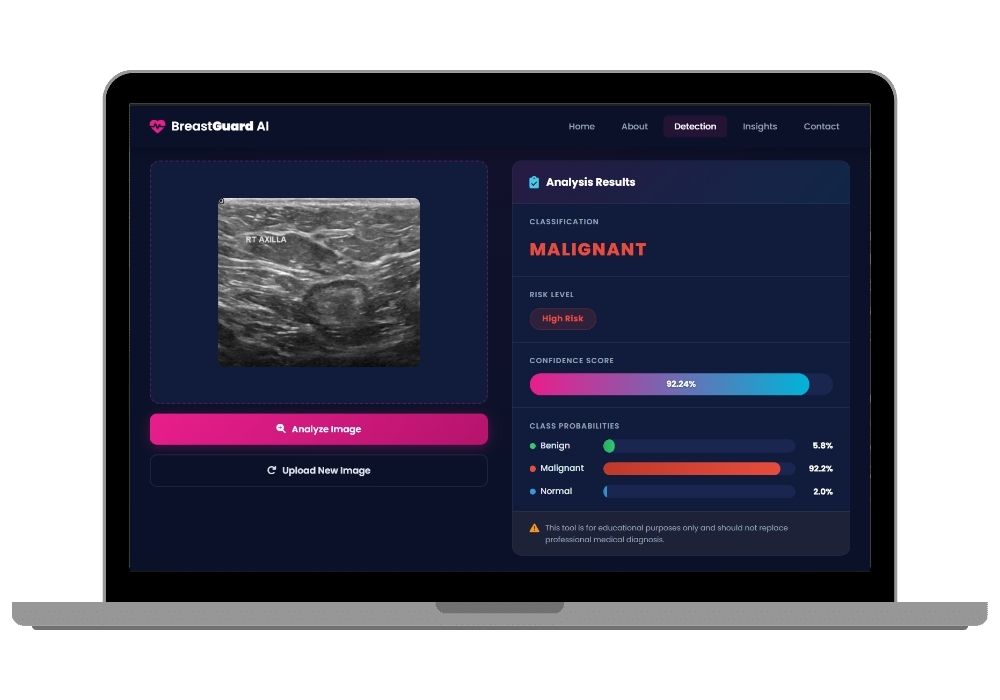
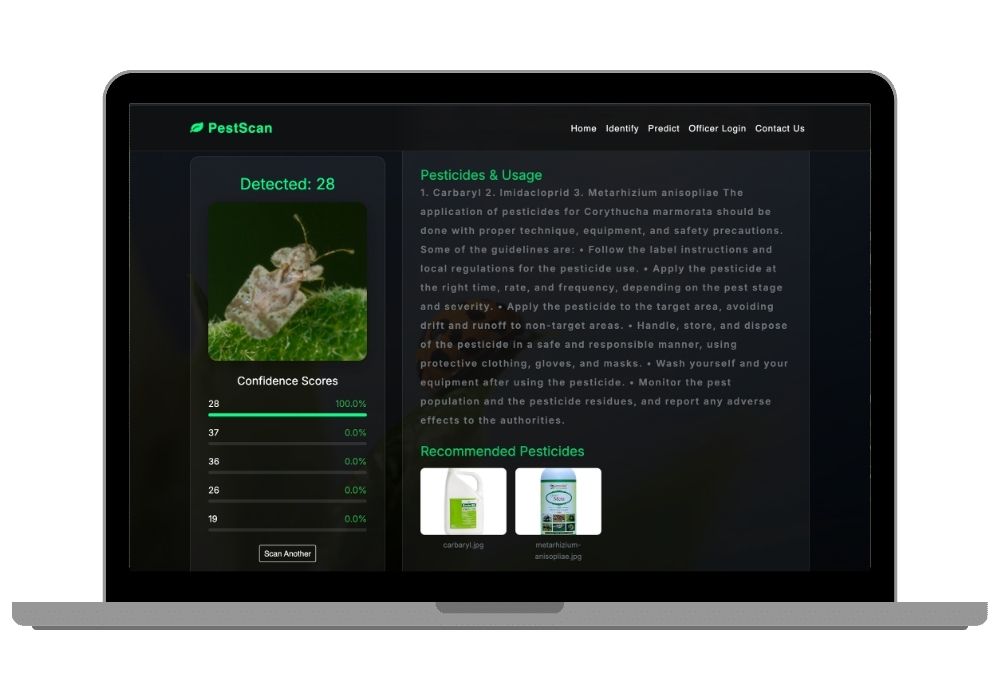
CNN projects handle image classification (medical images, plant diseases, face recognition), object detection (YOLO-based), and image segmentation. Models use architectures like ResNet, VGG, EfficientNet, and custom CNNs. Transfer learning projects show you how to fine-tune pre-trained models on your own dataset with just a few hundred images.

Transformers and Attention Models

Transformer projects cover text classification, question answering, summarization, and named entity recognition. Some use pre-trained models from Hugging Face (BERT, GPT-2, T5) with fine-tuning scripts. Others build transformer architectures from scratch so you understand the attention mechanism at the code level.

Generative Models (GANs and VAEs)

GAN projects include face generation with DCGAN, style transfer with CycleGAN, image super-resolution with SRGAN, and text-to-image generation. Each project includes the generator and discriminator architectures, training loop with loss visualization, and a script for generating new samples from the trained model.

Sequence Models (LSTMs and GRUs)

Sequence model projects predict stock prices, generate text, compose music, and classify time series data. You'll see proper sequence padding, embedding layers, bidirectional LSTM configurations, and attention mechanisms added to recurrent networks.
Why Choose CodeAj

Complete Source Code

Get 100% working source code with clean architecture and documentation.

Free Setup Support

Our team helps you install and run the project on your machine at no extra cost.

Free Updates & Customization

Get free updates and affordable customization to match your requirements.

Training Deep Learning Models

All projects include pre-trained weights, so you don't need to train from scratch. But if you want to retrain — maybe with a different dataset or modified architecture — training scripts are included. For GPU-intensive training, we provide Google Colab notebooks with GPU runtime pre-configured.

Hardware Requirements

Inference (running predictions) works on any modern laptop's CPU. Training CNNs and Transformers benefits from a GPU, which is why we include Colab notebooks. Projects specify estimated training time on both CPU and GPU so you can plan accordingly.

Model Evaluation

Each project includes evaluation scripts that generate accuracy/loss curves, confusion matrices, classification reports, and example predictions. These outputs are formatted for direct inclusion in project reports and presentations.

Deep Learning FAQ

Not for running predictions — all projects include pre-trained model weights that run on CPU. For retraining, a GPU speeds things up significantly. We include Google Colab notebooks with free GPU access so you can train without owning GPU hardware.

Projects use TensorFlow/Keras or PyTorch. TensorFlow projects use the Keras API for model definition and training. PyTorch projects use the standard Module class with custom training loops. Each project description specifies which framework is used.

Yes. Every project ships with saved model weights (.h5 for Keras, .pt for PyTorch). You can load the model and run predictions immediately. Training scripts are also included for retraining with different data or modified architectures.

Several projects demonstrate transfer learning — fine-tuning ResNet, EfficientNet, or BERT on custom datasets. The training scripts show you how to freeze base layers, modify the classification head, and train with a small dataset effectively.

Need a Specific Deep Learning Model?

Tell us the architecture and problem domain. We will match you with the right project or train a custom model.

Chat on WhatsApp
Chat with us